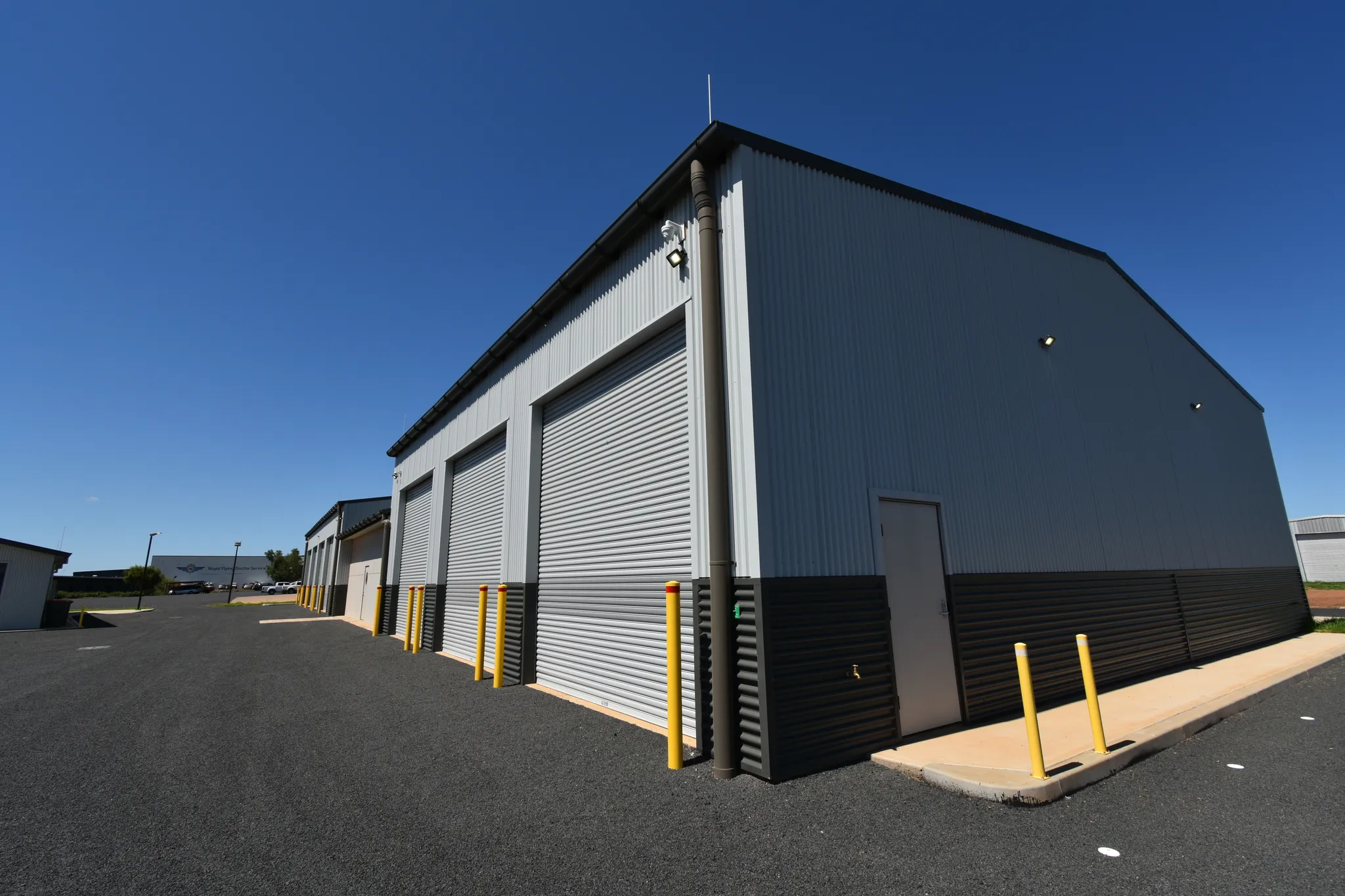
A shed only delivers its full return when it’s planned around the work that happens inside it. Choosing experienced Industrial Shed Builders early in the project, well before the slab is poured, is what turns a generic steel structure into a workplace that moves stock faster, keeps staff safer, and costs less to run for the next twenty years. This guide walks through the planning calls that matter most, from site and layout through to materials, compliance, and the value local experience brings to a Dubbo shed build.
What Maximum Efficiency Actually Looks Like in an Industrial Shed
An efficient industrial shed moves people, vehicles, and stock with the fewest possible touches, in a structure that costs less to operate and adapts to growth without major rework.
The markers to plan for:
- Minimum travel distance between deliveries, storage, work zones, and dispatch
- Clear, unobstructed sight lines for forklift and pedestrian safety
- Vertical storage capacity matched to your stock profile, not just floor area
- Natural light and ventilation that reduce daytime running costs
- Power, data, and compressed-air supply where the equipment actually sits
- Headroom and clear span to suit current machinery and the next generation of it
The right industrial shed builders Dubbo operators trust will press on each of these in the planning phase rather than assume defaults.
Getting the Site and Layout Right from Day One
Site selection and external layout dictate how efficiently vehicles, stock, and staff move every day for the life of the shed, so they deserve more planning time than they usually get.
- Vehicle flow. Plan for the largest vehicle that will use the site (typically a B-double or semi for many industrial operations), with turning circles, hardstand depth, and reversing space designed for it.
- Loading zones. Separate inbound and outbound loading where volumes justify it, and locate them so trucks don’t block staff parking or pedestrian access.
- Orientation. Aligning the long axis of the shed for natural light, prevailing wind, and afternoon-sun exposure cuts heating, cooling, and lighting loads year-round.
- Hardstand and drainage. Heavy vehicle hardstand needs proper subbase, drainage falls, and stormwater management designed for industrial loads, not residential.
- Future expansion. Reserve a buildable footprint for the next stage now, with services stubbed and access roads sized for it.
- Local zoning. Confirm zoning, setback, and noise limits with Dubbo Regional Council before locking in the site layout, not after.
Designing the Internal Layout Around Real Operations
The internal layout should be designed around how the work actually flows, not around a generic template, and the difference shows up in throughput and safety from week one.
- Clear span vs columns. Clear-span sheds suit racking, manufacturing, and large equipment, while column designs can be cheaper for storage-heavy operations with predictable racking layouts.
- Storage geometry. Match racking height, aisle width, and bay length to your stock profile and the forklifts available, not to a default racking spec.
- Equipment placement. Position fixed plant near three-phase supply, extraction, and clear maintenance access from day one.
- Work zones. Separate noisy, dusty, or chemical-handling zones from clean assembly, dispatch, and office areas with appropriate compliance.
- Pedestrian-vehicle separation. Marked walkways, physical barriers, and dedicated personnel doors are non-negotiable in a modern industrial shed.
- Mezzanine and office spaces. Plan office, amenities, and crib rooms with line of sight to the work floor where supervision matters, and acoustic separation where it doesn’t.
Materials, Insulation, and Compliance That Pay Off Long Term
The cheapest steel package on day one is rarely the cheapest shed over twenty years, and the right material calls protect efficiency, comfort, and resale value.
| Decision | Cheap-Today Choice | Efficient-Long-Term Choice |
|---|---|---|
| Wall and roof insulation | Bare sheet or thin blanket | Foil-faced blanket or insulated panel sized for use |
| Lighting | Standard high-bay fluorescent | LED high-bay with daylight and occupancy sensors |
| Ventilation | Passive ridge vents only | Whirlybirds, louvres, or powered exhaust matched to load |
| Floor | Standard slab | Engineered slab sized for forklifts, racking loads, and chemical resistance where needed |
| Compliance | Minimum BCA | BCA plus WHS, fire egress, and industry-specific requirements designed in |
Fire safety, WHS, and local building code compliance all need to be designed in from the start. Retrofitting fire egress, sprinkler systems, or hazardous-goods storage is far more expensive than planning for them up front.
Why Local Industrial Shed Builders Deliver Better Outcomes
Local builders bring established trade networks, council relationships, and the on-the-ground knowledge of Central West conditions that protect timelines and budgets through the build.
- Council relationships. Working relationships with Dubbo Regional Council’s planning and certification teams help DA and CDC lodgements move smoothly.
- Trade networks. Long-standing partnerships with concreters, steel fabricators, electricians, and roofing crews mean trades show up when they’re scheduled.
- Supply chain access. Established accounts with steel, cladding, and concrete suppliers matter most when stock tightens or lead times stretch.
- In-house equipment. Owning excavators, bobcats, scissor lifts, and forklifts in-house removes hire delays on earthworks, slab prep, and erection.
- Site visits and snags. A locally based team is on site, or close to it, which keeps RFIs and quality questions moving day to day.
- Community accountability. Local Central West NSW builders live with the buildings they put up, and that long-term presence quietly raises the standard of work.
National shed contractors can absolutely deliver good outcomes on specialised builds. For most Dubbo industrial sheds though, a local team finishes ahead on logistics, response time, and after-handover support.
Frequently Asked Questions
How early should I engage an industrial shed builder in Dubbo?
As early as feasibility. Builder input on site, layout, and structural choices before design is locked saves more on rework and operating cost than any other planning step.
What’s the typical timeframe for an industrial shed build in Dubbo?
It depends on size, complexity, and approvals. Small storage sheds can be turned around in a matter of months from approval; larger industrial facilities with offices, services, and complex compliance take longer. Local builders often shorten the timeline by running approvals and trade scheduling in parallel.
Should I choose clear-span or column-supported design?
Clear span suits operations needing flexible internal space, large machinery, or future reconfiguration. Column designs can be more economical for storage-heavy operations with fixed racking layouts. Your builder should size the comparison for your operation, not a template.
What licensing should a Dubbo industrial shed builder hold?
A current NSW builder’s licence, public liability and contract works insurance, and demonstrated experience on industrial sheds of comparable size and use. Master Builders Association membership is a useful additional signal.
Do I need council approval for an industrial shed in Dubbo?
Most industrial sheds require either a Complying Development Certificate or a full Development Application through Dubbo Regional Council, depending on zoning, height, and use. Your builder should manage the lodgement.
How do I plan for future expansion when building today?
Reserve land for the next stage, stub services to the expansion footprint, and design slab joints, structural connections, and access roads so a future extension can be added without compromising the original shed.
What insulation and ventilation should an industrial shed have?
For most Central West industrial uses, foil-faced blanket or insulated panel walls and roof, combined with whirlybirds or powered exhaust, deliver a workable balance. Climate-controlled operations or temperature-sensitive stock need a higher specification.
Can a builder deliver a shed and a fit-out under one contract?
Yes. A single builder running shed, office fit-out, hardstand, and external works under one contract removes the gaps between trades and gives you one point of accountability for the result.
The Bottom Line
The sheds that deliver the best return are the ones planned around the work, not the ones planned around a default template. Choosing experienced Industrial Shed Builders early lets site, layout, materials, and compliance work in your favour for decades, and choosing local builders adds the council, trade, and community advantages that protect both the build and the run.
Planning an industrial shed in Dubbo or the wider Central West?
Phone BLD Constructions on (02) 6884 1890 for a free, no-obligation quote before the slab is locked in, or make an online enquiry. BLD Constructions has been the team behind Central West industrial sheds and warehouses since 2004, holding NSW Licence 213455C, Master Builders Association membership, the Master Builders Western Regional Excellence Award in 2023 and again in 2024, and a 100% customer satisfaction guarantee. We deliver industrial sheds and warehouses and commercial projects up to $5M across Dubbo, Orange, Bathurst, Parkes, Forbes, Cowra, Mudgee, Wellington, Narromine, and the wider Central West. Notable local sheds in our project gallery include the SES Shed Dubbo, the Wylde Shed, McGuinn Crescent Sheds, and Delroy Park Fire Station, with owners’ feedback in client testimonials. One team takes the shed from slab and structure through to fit-out, hardstand, and handover, with in-house plant and a long-standing Central West trade network keeping the program moving.